- Follow Us:
- (828) 835-7580


How to Prepare for the Transition From Hospital to Rehabilitation
August 5, 2026
Hospital Discharge to Skilled Nursing: A Guide for Families
September 18, 2026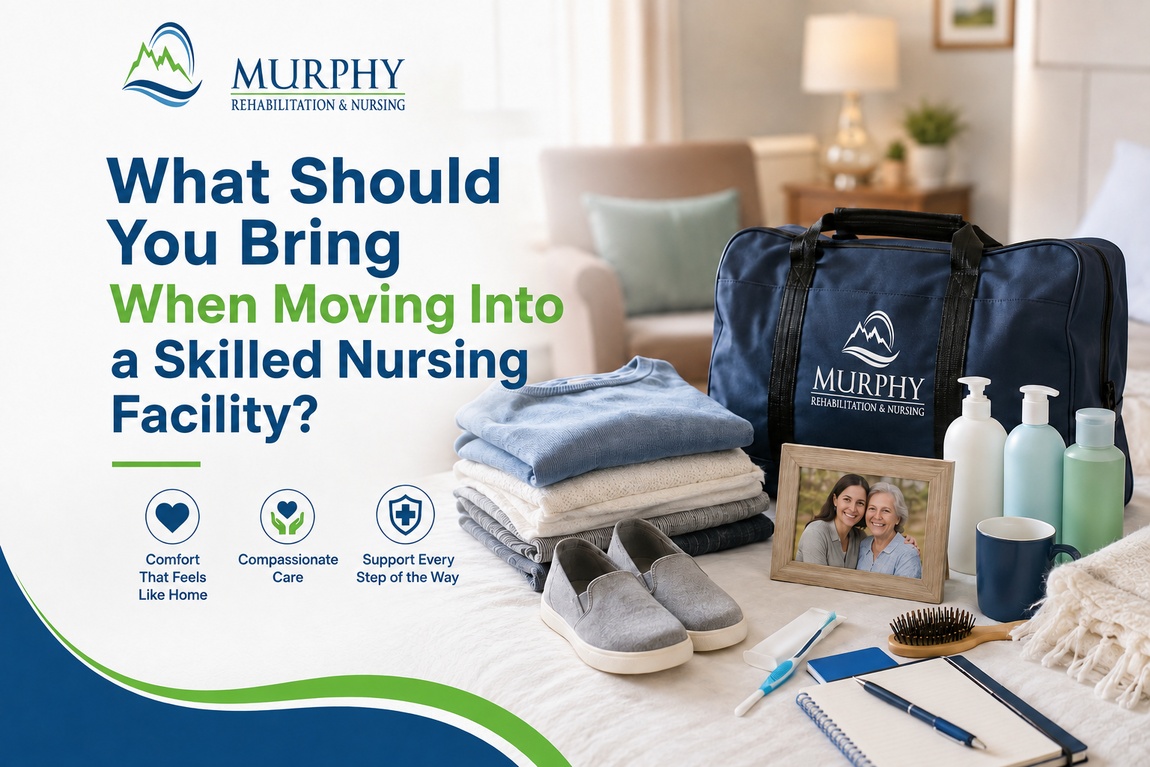
Packing thoughtfully can help your loved one feel at home from the first day, without crowding a room that needs to stay safe and easy to navigate.
Moving into a skilled nursing facility is a significant transition, whether the stay is for short-term rehabilitation or longer-term care. Along with questions about medical services, therapy, and daily routines, families often face a very practical concern: what should we pack?
It is easy to feel as though you need to bring everything from home to make a loved one comfortable, but skilled nursing rooms are designed to provide many everyday necessities. Packing thoughtfully can make the transition easier without overwhelming the available space. The goal is to bring enough familiar, useful items to help your loved one feel comfortable while keeping their room safe, organized, and easy to navigate.
If you are preparing for admission to a nursing home in Murphy NC, the facility’s admissions team should always be your first resource for specific packing recommendations. Policies can vary, particularly when it comes to medications, furniture, electronics, and valuables. Still, several essentials are helpful for most skilled nursing stays.
Jump To Section
Quick Answer
What Should You Bring to a Skilled Nursing Facility?
For a skilled nursing stay, bring comfortable clothing, supportive footwear, personal care items, important admission documents, necessary assistive devices, and a few familiar personal belongings. Before bringing medications, electronics, furniture, or other restricted items, check with the admissions team.
Comfortable, season-appropriate clothing
Supportive, properly fitting footwear with nonslip soles
Personal toiletries and care items
Identification and insurance information
Medical records and other required admission documents
Glasses, hearing aids, dentures, or other personal devices
A few meaningful photographs or keepsakes
Books, puzzles, crafts, or other approved activities
Everyday Comfort
Start With Comfortable, Practical Clothing
Comfort should be the priority when choosing clothing. Residents may participate in therapy, activities, meals, and other daily routines, so clothes should be easy to put on, comfortable to wear, and appropriate for the season.
Consider packing several days’ worth of comfortable outfits, including:
Loose-fitting pants and shirts that are simple to put on and take off without assistance
Sweaters or lightweight layers so your loved one can adjust to changing room temperatures
Pajamas and undergarments in enough quantity to cover several days between laundry cycles
Socks and a robe if your loved one enjoys wearing one
Supportive, properly fitting shoes with nonslip soles, which are generally a better choice than loose slippers or shoes that are difficult to secure
If rehabilitation is part of the care plan, clothing that allows easy movement is particularly important. Tight or restrictive clothing can make physical and occupational therapy more difficult, and safe footwear can make a meaningful difference for residents working on balance and mobility.
Be sure to clearly label clothing with your loved one’s name according to the facility’s recommendations. Ask the admissions team whether laundry services are provided and if there are any special labeling requirements before arrival.
Daily Routines
Pack Personal Care Items
Having familiar toiletries can make a new environment feel more comfortable. Your loved one may appreciate continuing to use the same shampoo, lotion, deodorant, toothbrush, or other products they use at home.
Depending on facility policies and individual needs, personal care items might include:
Toothbrush and toothpaste
Hairbrush or comb
Deodorant
Preferred shampoo or body wash
Lotion
Shaving supplies
Denture supplies
Eyeglass cases
Before packing large quantities, ask what the facility already provides. You may find that many basics are available, allowing you to focus on the products that are personally important to your loved one.
Certain products may need to be stored by staff for safety reasons, so it is always best to ask before bringing medications, sharp grooming tools, or other items that could require special handling.
Paperwork
Gather Important Documents Before Admission
Paperwork may not make a room feel more like home, but having the correct documents ready can make the admissions process much smoother.
The exact requirements will vary depending on the resident and type of stay, but families may be asked to provide:
Identification for the resident, along with any documentation of a legal representative
Insurance information including Medicare, Medicaid, or private plan details
Medical records and physician orders covering recent care and current treatment plans
Emergency contact information for family members and other key decision makers
Advance directives when applicable
A current list of medications along with allergies, physicians, diagnoses, and recent medical procedures
If your loved one is transferring directly from a hospital, much of the clinical information may be coordinated between the hospital and skilled nursing facility. Even so, keeping copies of important information for your own records can help you stay organized and answer questions during admission.
When preparing for a skilled nursing facility in Murphy NC, contact the admissions team ahead of time for a complete list of required documentation. Knowing exactly what is needed can help avoid last-minute stress on move-in day.
Assistive Equipment
Bring Necessary Medical and Assistive Devices
If your loved one regularly uses glasses, hearing aids, dentures, or another personal device, make sure those items come along.
Hearing aids packed with the appropriate charger, batteries, and a clearly labeled storage case
Eyeglasses with a protective case to prevent damage or loss
Denture supplies including cleaning products and a labeled container
Mobility equipment such as a personal walker, wheelchair, or cane, but only after checking with the facility first
Mobility equipment requires a little more planning. Before bringing a personal walker, wheelchair, cane, or other assistive device, ask the facility whether it should come with the resident or whether equipment will be provided as part of the care plan.
This is particularly important for individuals receiving rehabilitation because therapists may want to evaluate mobility and recommend the safest equipment based on the resident’s current abilities.
Emotional Comfort
Add a Few Familiar Touches From Home
Clinical care may be the primary reason someone enters a skilled nursing facility, but emotional comfort matters too.
A few familiar belongings can make a new room feel warmer and more personal. Family photographs, a favorite blanket, small pieces of artwork, greeting cards, or another meaningful keepsake can provide a reassuring connection to home.
Try to choose items that have sentimental value without being financially valuable or irreplaceable. Space is typically limited, and too many decorations or belongings can create clutter that makes it harder for residents and caregivers to move around safely.
For a longer stay, families can ask whether small decorative items are permitted and what options are available for personalizing the resident’s space.
Everyday Enjoyment
Do Not Forget Entertainment and Favorite Activities
There can be downtime between therapy sessions, meals, activities, and visits, so consider what your loved one genuinely enjoys doing.
Books or magazines in the genres and formats your loved one already reaches for
Puzzle books for a quiet, low-effort way to pass an afternoon
Knitting or craft supplies if handwork is part of their usual routine
Headphones or a tablet along with the chargers each device needs
If bringing electronic devices, ask about the facility’s policies regarding electronics and internet access.
You do not need to pack enough entertainment for months at a time. Family members can rotate books, activities, photographs, and other items during visits, which helps keep the room organized while providing something new to enjoy.
Just as Important
What Should You Leave at Home?
Knowing what not to bring is just as important as knowing what to pack.
Expensive jewelry and large amounts of cash which are generally better left somewhere secure
Irreplaceable heirlooms and original documents that are not required for admission
Large furniture and rugs which can crowd a room and create tripping hazards
Extension cords, heating devices, and electric blankets which are often restricted for fire safety reasons
Appliances of any kind, unless the facility has confirmed they are permitted
Skilled nursing facilities have safety requirements designed to protect residents, and certain household items may not be permitted, so it is worth checking before move-in day.
Medications are another important consideration. Do not assume you should pack prescription or over-the-counter medications from home. Medication administration is typically managed by the nursing team, so discuss current prescriptions with the admissions staff and follow their instructions.
Tailoring the List
Consider the Length and Purpose of the Stay
What you pack should also depend on why your loved one is entering skilled nursing care.
Short-term rehabilitation may call mostly for comfortable therapy clothing, supportive footwear, toiletries, and a few personal items, as with someone staying temporarily after knee replacement surgery
Longer-term care may benefit from additional clothing, seasonal items, photographs, and familiar belongings that make the space feel more personal
There is no need to bring everything on the first day. Starting with the essentials gives your loved one time to settle in, and additional belongings can always be brought later.
How We Help
Making the Transition Easier at Murphy Rehabilitation & Nursing
Preparing belongings is only one part of moving into a skilled nursing facility. Knowing what to expect can make the emotional side of the transition easier as well.
At Murphy Rehabilitation & Nursing, our team works with residents and families throughout the admissions process to help answer questions and make the transition as comfortable as possible. Whether your loved one is coming to us for short-term rehabilitation, skilled nursing services, or ongoing care, understanding their individual needs and preferences helps us provide more personalized support.
Families searching for a nursing home in Murphy NC should feel comfortable asking questions before admission, including what to bring, how medications are handled, what laundry services are available, and how residents can personalize their rooms.
Choosing a skilled nursing facility in Murphy NC is not simply about finding a place to stay. It is about finding an environment where your loved one can receive appropriate care while maintaining comfort, dignity, and meaningful connections to the life they know.
Print and Pack
Skilled Nursing Facility Packing Checklist
Use this simple checklist when preparing for admission to a skilled nursing facility in Murphy, NC. Confirm facility-specific requirements with the admissions team before move-in day.
Clothing and sleepwear
Nonslip or supportive shoes
Toiletries and personal care supplies
Eyeglasses, hearing aids, or dentures
Chargers, batteries, and storage cases when needed
Identification and insurance cards
Medical and admission paperwork
Approved personal items from home
Books, magazines, puzzles, or favorite activities
In Closing
A Little Preparation Can Make a Big Difference
Moving into a skilled nursing facility can feel overwhelming, but packing does not have to. Start with comfortable clothing, essential personal care items, necessary documents, and any important assistive devices. Then add a few familiar belongings that help your loved one feel more at home.
Most importantly, communicate with the facility before move-in day. Admissions staff can provide guidance based on your loved one’s specific type of stay and help you avoid bringing unnecessary or restricted items.
With thoughtful preparation and the right support, the move into skilled nursing care can feel less intimidating and more like what it is meant to be: a transition into an environment designed to provide safety, support, rehabilitation, and compassionate care when it is needed most.
Common Questions
Frequently Asked Questions About Moving Into Skilled Nursing Care
What should I bring for a short-term rehabilitation stay?
Bring comfortable therapy-friendly clothing, supportive footwear, personal care items, required documents, necessary assistive devices, and a few familiar items. Ask the admissions team what is recommended for the specific stay.
What should I bring for long-term skilled nursing care?
In addition to everyday essentials, consider bringing additional clothing, seasonal items, photographs, and a few familiar belongings that can make the room feel more personal. Start with essentials and add items later as needed.
Can I bring medications from home?
Do not assume that medications should be brought or stored independently. Ask the admissions team how prescription and over-the-counter medications should be handled before admission.
Can residents bring personal items to a skilled nursing facility?
Personal items such as photographs, small artwork, greeting cards, or a favorite blanket may help make a room feel familiar. Check facility policies before bringing larger, valuable, or potentially restricted items.
What should I ask before admission to a skilled nursing facility in Murphy, NC?
Ask what clothing and personal items are recommended, which documents are required, how medications are handled, whether laundry is provided, and which electronics or room items are permitted.
Getting Ready for Move-In Day?
Our admissions team is happy to walk you through what to bring, how medications are handled, and what daily life looks like here. Call or reach out online and we will help you prepare.