- Follow Us:
- (828) 835-7580

Questions to Ask When Choosing a Nursing Home in Murphy, NC
June 24, 2026
How to Prepare for the Transition From Hospital to Rehabilitation
August 5, 2026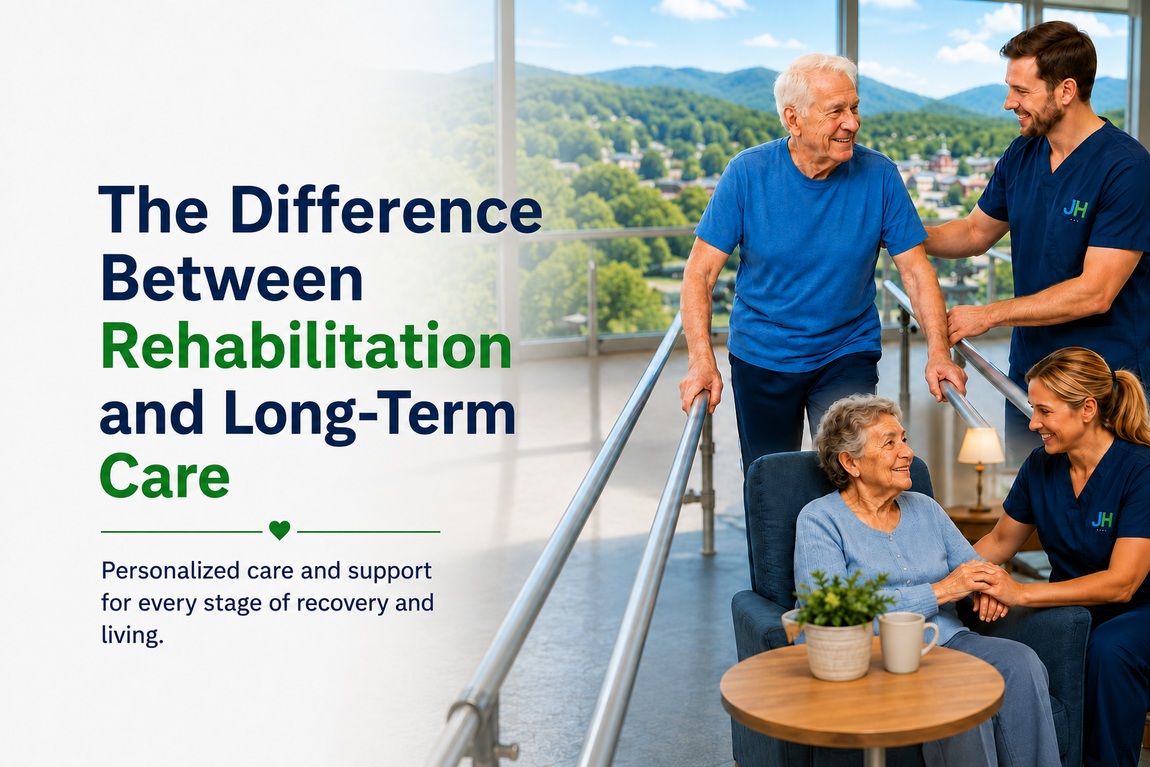
Rehabilitation and long-term care both offer real support, but they are built around very different goals.
When a loved one needs additional care after an illness, injury, or hospitalization, families are often faced with an important question: should they choose rehabilitation or long-term care? While both options provide valuable support, they serve very different purposes and are designed to meet different needs. Understanding the distinction can make it easier to choose the right path for recovery, health, and overall quality of life.
For many families, the terminology itself can be confusing. Words like “rehab,” “skilled nursing,” and “long-term care” are sometimes used interchangeably, even though they describe very different types of services. The good news is that once you understand the goals and benefits of each option, the decision often becomes much clearer.
Jump To Section
Recovery Focused
Understanding Rehabilitation Care
Rehabilitation care is typically designed to help individuals recover after a surgery, illness, injury, or hospital stay. The primary goal is to help patients regain strength, mobility, independence, and the skills needed to return home safely and resume their normal routines. Rehabilitation stays are usually temporary and focused on achieving specific recovery goals within a defined period of time.
Patients entering rehabilitation may be recovering from knee or hip replacement surgery, a stroke, cardiac event, fall, fracture, or a prolonged hospitalization. During their stay, they often receive a combination of services designed to support recovery and maximize independence:
Physical therapy to rebuild strength, balance, and walking ability
Occupational therapy to relearn daily activities such as bathing, dressing, and preparing meals
Speech therapy to improve communication skills and related functions
Skilled nursing care provided alongside therapy throughout the stay
Medical oversight that keeps recovery on track day by day
Rather than simply maintaining health, rehabilitation programs are highly goal-oriented. Therapists work closely with patients to help them improve function step by step. Progress is monitored regularly, and care plans are adjusted as patients achieve milestones and move closer to returning home.
Ongoing Support
What Is Long-Term Care?
Long-term care serves a different purpose. Instead of focusing on short-term recovery goals, long-term care is designed for individuals who require ongoing assistance with medical needs or activities of daily living over an extended period of time.
Some residents may need support because of chronic illnesses, progressive conditions, cognitive decline, or physical limitations that make living independently difficult or unsafe. Others may require around-the-clock nursing supervision or assistance with daily tasks such as eating, bathing, dressing, medication management, or mobility.
Unlike rehabilitation, there is often no expected discharge date associated with long-term care. The goal shifts from recovery and returning home to maintaining health, maximizing comfort, preserving independence whenever possible, and supporting the highest possible quality of life.
Residents receiving long term care Murphy, NC families depend on often develop close relationships with caregivers and staff members over time.
The care environment becomes more than a healthcare setting. It becomes home.
Timelines
Differences in Length of Stay
One of the biggest differences between rehabilitation and long-term care is the expected length of stay.
Rehabilitation is generally short term and may last anywhere from a few weeks to several months depending on the individual’s condition and progress. The entire care plan is centered around helping the patient return home or transition to a lower level of care as safely and efficiently as possible.
Long-term care, on the other hand, is designed for ongoing support. Some residents may remain in long-term care for months, while others may live in a nursing community for years. The focus is not necessarily on discharge but on creating a safe, comfortable, and supportive environment that promotes health, dignity, and meaningful daily experiences.
Care Delivery
Therapy Services and Medical Support
Therapy often plays a central role in rehabilitation programs. Patients may participate in multiple therapy sessions each day, working closely with physical, occupational, and speech therapists to improve function and achieve recovery goals.
In long-term care settings, therapy services may still be available, but they are generally provided on an as-needed basis rather than as the primary focus of care. The emphasis is more often placed on medical management, chronic disease monitoring, medication administration, and assistance with everyday activities.
Both rehabilitation and long-term care benefit from skilled nursing support. Licensed nurses monitor health conditions, manage medications, coordinate physician care, and respond to changing medical needs. The difference lies primarily in the overall goals of treatment rather than the quality of care being provided.
Making the Choice
Which Option Is Right for Your Loved One?
Choosing between rehabilitation and long-term care begins with understanding your loved one’s current health needs and long-term goals.
Rehabilitation may fit best when the individual is expected to improve with therapy and return home safely after surgery, illness, or injury. Patients who are motivated to regain independence and have specific recovery goals often benefit greatly from structured therapy programs and short-term skilled nursing support.
Long-term care may be more appropriate when an individual requires ongoing medical supervision or assistance with daily activities that cannot safely be provided at home. This is especially true for individuals with advanced chronic conditions, significant mobility limitations, or cognitive disorders that require continuous support.
Support at home matters too. Even when rehabilitation goals are achieved, some individuals may still require additional assistance that family caregivers are unable to provide on a full-time basis.
Every Story Is Different
The Importance of Personalized Care
One of the most important things to remember is that every situation is unique. There is no one-size-fits-all answer when it comes to senior care, and many individuals move between rehabilitation and long-term care at different stages of life.
A patient may enter rehabilitation after surgery, return home successfully, and later require long-term care years down the road. Others may transition directly from hospitalization into long-term care if their needs require ongoing support.
The best care decisions are made through open communication between families, physicians, nurses, therapists, and care coordinators who can evaluate each individual’s medical needs, goals, and preferences.
Our Approach
How Murphy Rehabilitation & Nursing Supports Both Recovery and Long-Term Wellness
At Murphy Rehabilitation & Nursing, we understand that choosing the right type of care can feel overwhelming for families. That is why our team works closely with residents and loved ones to help determine the most appropriate level of support while creating personalized care plans designed around each individual’s needs.
Whether someone requires short-term rehabilitation after a hospital stay or ongoing long term care Murphy, NC families can trust, our goal is always the same: providing compassionate care that promotes dignity, independence, and the highest possible quality of life.
Our experienced team offers skilled nursing care, rehabilitation services, and individualized support in a welcoming environment where residents are treated like family and encouraged to live as fully and comfortably as possible.
In Closing
Choosing the Right Path Forward
Understanding the difference between rehabilitation and long-term care is an important step in making informed decisions about your loved one’s health and future. Rehabilitation focuses on recovery, rebuilding strength, and returning home safely, while long-term care provides ongoing support for individuals who require assistance with medical needs and daily living activities over an extended period.
Neither option is inherently better than the other. They simply serve different purposes at different stages of life and recovery. By understanding the goals of each type of care, families can feel more confident choosing the solution that best supports their loved one’s health, independence, and overall well-being.
At Murphy Rehabilitation & Nursing, we are honored to help families navigate these decisions while providing compassionate care and support every step of the way.
Not Sure Which Level of Care Is Right?
Our care coordinators are here to talk it through with you and help you find the right fit for your loved one.